The research problem
Metadata written only at deposit time becomes a reconstruction exercise. Units, missing-value conventions, coverage changes and access decisions are easiest to preserve when they are still current.
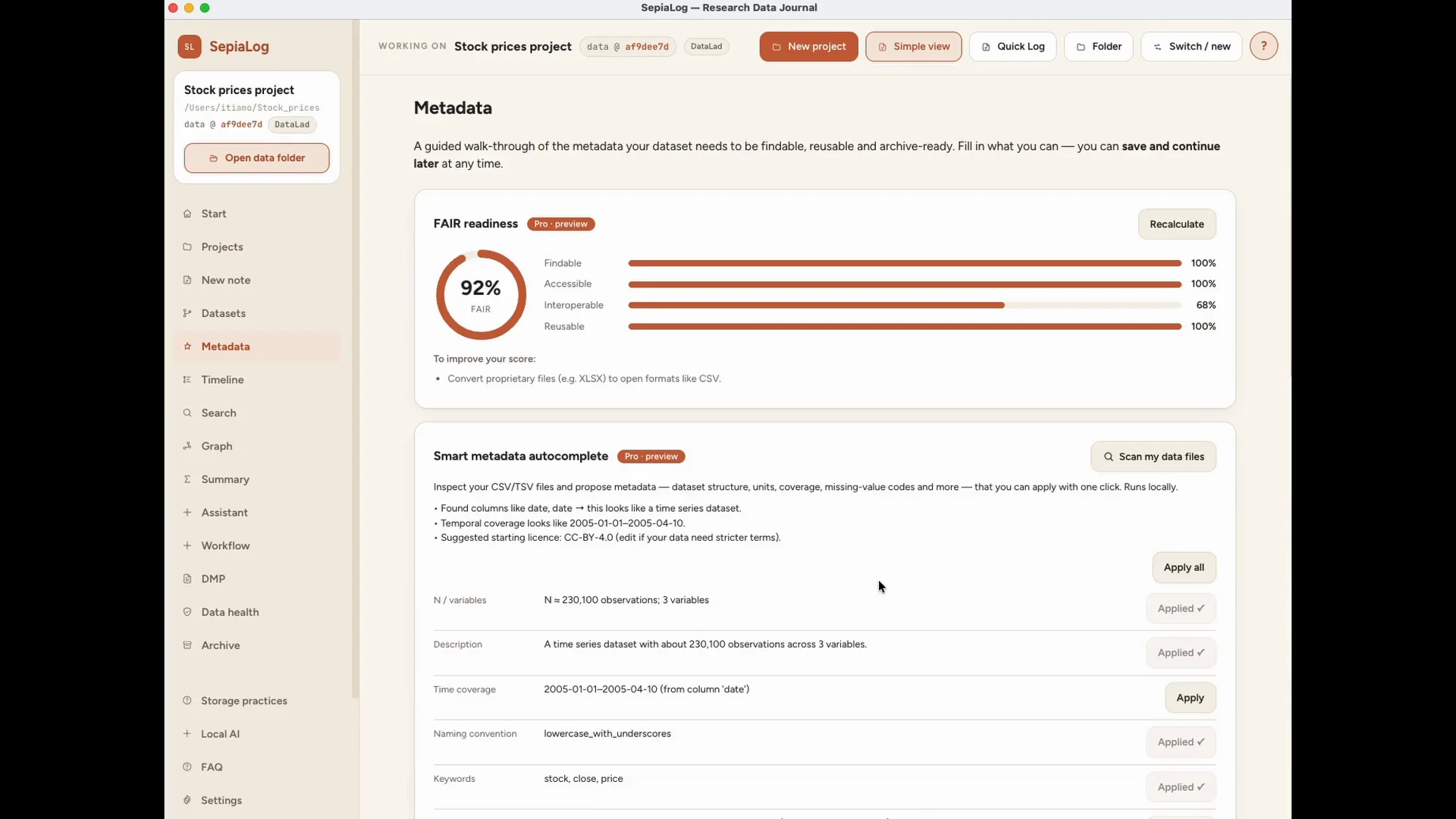
How the workflow works
- Complete the guided metadata sections gradually.
- Optionally scan supported tabular files locally for suggested structure and coverage information.
- Review FAIR readiness and export human-readable or repository-oriented metadata.
What SepiaLog provides
- Guided project and variable documentation
- Local smart metadata suggestions
- Findable, Accessible, Interoperable and Reusable checklist
- Word, PDF, DataCite and Dublin Core exports
Common questions
Does FAIR mean open?
No. Sensitive data can be FAIR when access conditions and the route to legitimate access are clearly documented.
Can progress be saved?
Yes. Metadata can be completed over time rather than in one session.
Does SepiaLog create a codebook?
It supports structured variable documentation and exports that can be used as a codebook.